
During the 2019–2023 legislative period, public lighting has been one of the key areas of action for municipalities seeking improvement — particularly in one of the most pressing and relevant challenges today: energy efficiency.
Thanks to the maturity of the market, the positive experiences of other municipalities that have replaced obsolete luminaires with new LED technology, and the significant boost provided by the IDAE, through which these municipalities have benefited from substantial financial aid, many local councils have made the renewal of public lighting a central point of their programs.
The vast majority of these projects have been carried out through public tenders, involving considerable technical and financial demands, as well as significant municipal resources to ensure proper contracting.
Spain currently has a lighting network of over 8 million luminaires, yet less than 30% have been upgraded. In 2010, the market experienced a boom that led hundreds of municipalities to switch to LED lamps of very poor quality, with virtually no control. Today, the vast majority of those municipalities have been forced to replace their lighting systems once again.
The motivation is not only technological — it also stems from the obsolescence of entire installations. EnergyTAS demonstrates in every one of its projects that more than 60% of lighting systems are in poor condition and non-compliant with regulations, which has led many municipalities to analyze their public lighting from a safety perspective, rather than focusing solely on energy efficiency.
After considering this market overview, municipalities must evaluate the best formula to carry out the work — whether through a public works project or an energy services company (ESE/ESCO). Based on its long experience in the market, the consultancy firm EnergyTAS has a clear position on this.
Today, there are two implementation models used in almost every Spanish municipality for lighting modernization:
one carried out through traditional public works projects, and the other through Energy Services Companies (ESEs/ESCOs).
After many years of experience working in the public lighting sector under both models, EnergyTAS increasingly recommends the ESE model, as it offers greater guarantees of long-term efficiency and results.
When explaining to municipalities the advantages and disadvantages of each model, there are still public entities that do not fully understand the work and operation of ESEs.
Before anything else, it is important to differentiate the two models.
A public works project, the most traditional and widely used approach for years, consists of designing a lighting renovation plan under the legal framework of “Obra Pública”. This requires a project and clear definition of objectives, followed by a tendering process for companies to submit technical and financial bids.
After the tender, the winning bidder executes the work and hands over the lighting system to the municipality for its own management and supervision.
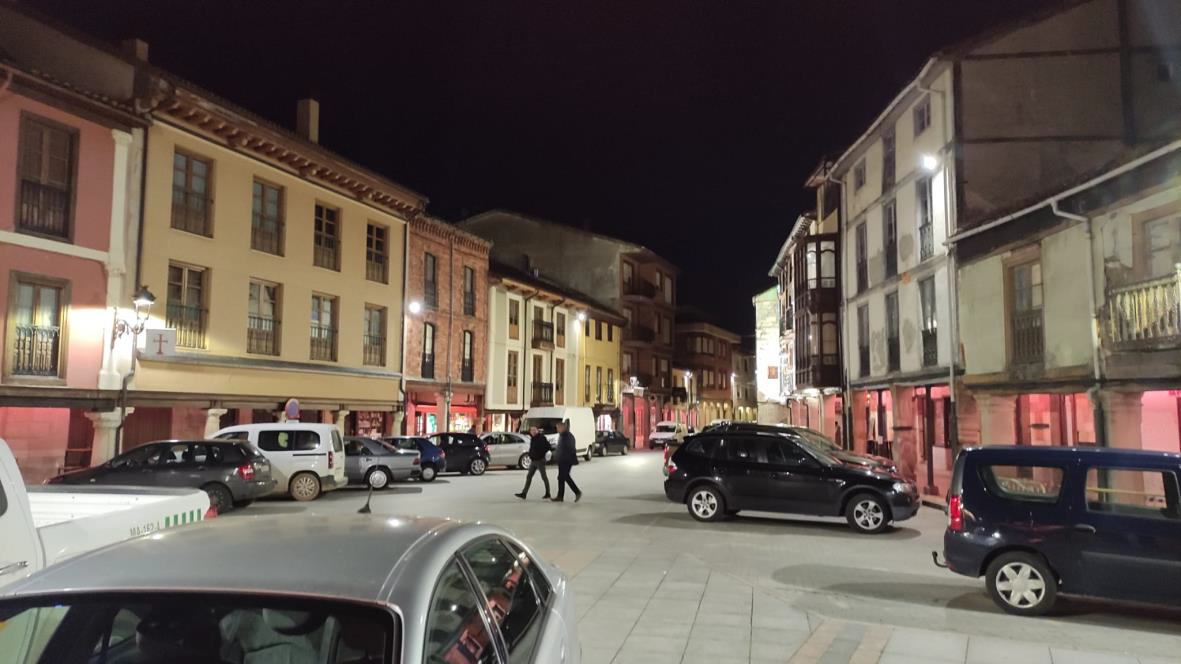
However, once the work is completed, the municipality faces new challenges: it must launch another tender to contract a new electricity supplier, since the energy consumption levels have changed due to the achieved savings, and it is legally required to organize a new procurement process.
On top of that, another tender must be conducted to hire a maintenance company responsible for the facilities and to ensure their long-term performance and compliance.
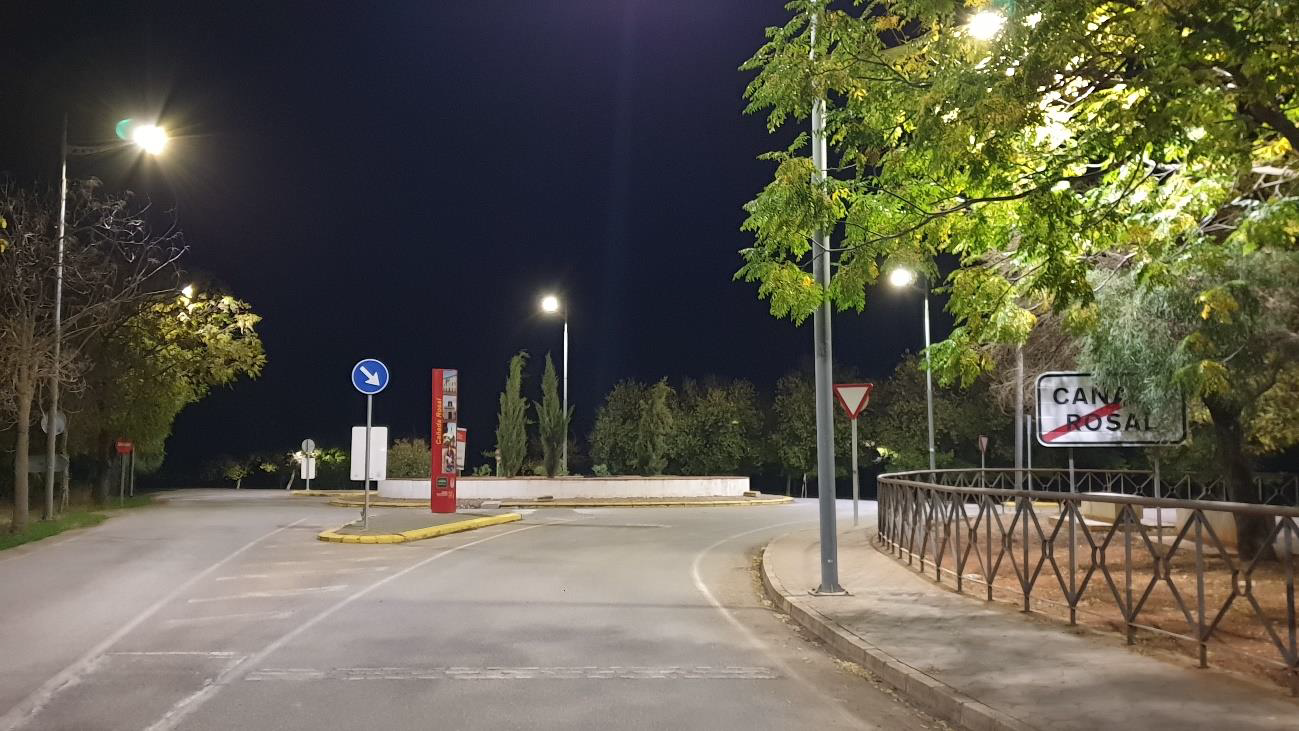
By contrast, an ESE project involves a comprehensive renovation designed to meet specific technical objectives, at the company’s own risk and expense.
An ESE or ESCO does not represent privatization — it is simply a structured model that ensures public lighting, as a basic essential service, remains continuously modern, safe, and fully operational, with minimal service interruptions.
An ESE does not receive direct payment for its investments; instead, it makes the investments and recovers them through the savings generated, which are shared with the municipality, either by reducing the electricity bill and/or by amortizing the investments made.
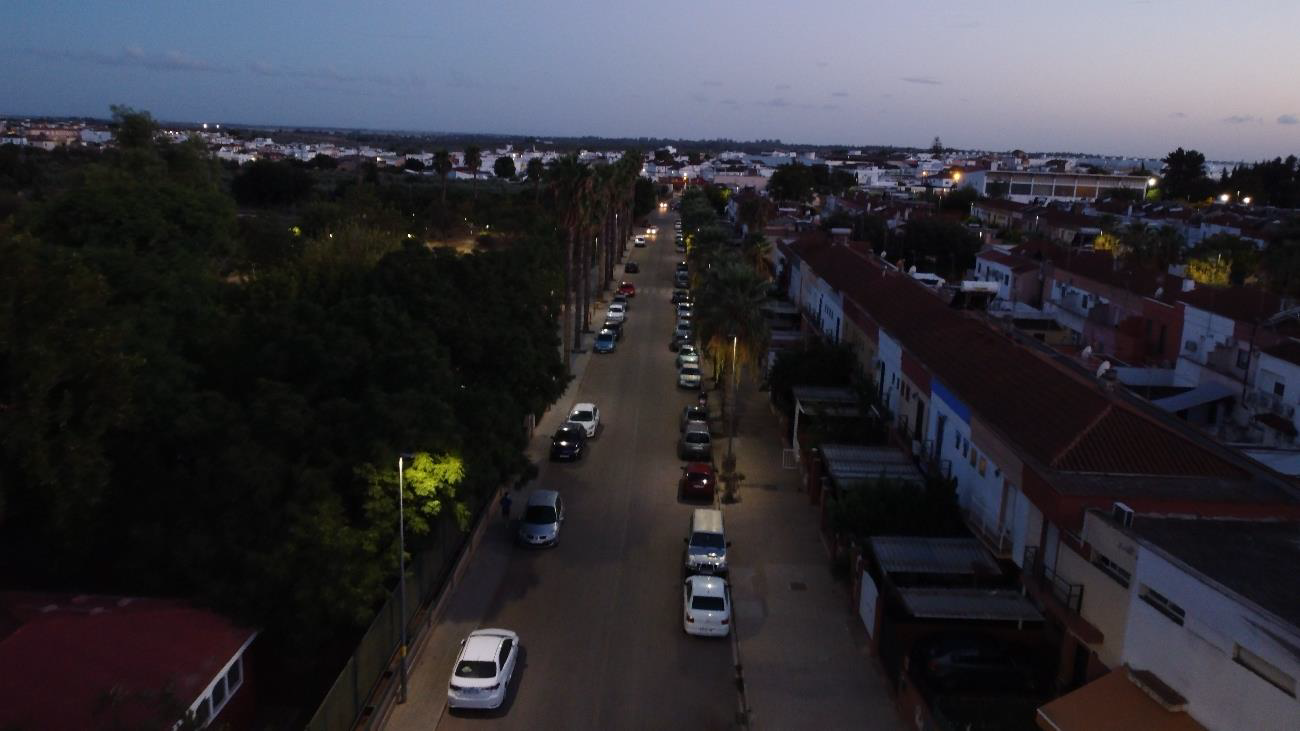
The ESE undertakes all investments and the full renovation in a period not exceeding one year. After that, it becomes responsible for electricity supply and maintenance.
Therefore, as the primary stakeholder, the ESE seeks the best materials and components, ensuring lower maintenance costs and greater durability — which, in turn, provides the municipality with a better and more efficient lighting system.
This approach ensures long-term sustainability, as ESE contracts generally last up to 25 years, with the majority averaging around 15 years.
This simplifies the entire process: through a single tender, the municipality secures installation, renovation, electricity supply, and maintenance for the full duration of the contract.
Another major advantage of the ESE model is its specialization.
There are currently about twenty Energy Services Companies operating in Spain, all with extensive experience in the sector.
ESEs have been active in Spain since 2011, when the first project was carried out in Alcorcón (Madrid) — a project promoted by IDAE, along with Soto del Real and Teruel.
That pioneering project, developed by EnergyTAS, was also 100% compatible with the grants provided by the IDAE.
To date, EnergyTAS has operated in over 200 municipalities using this model, especially in those where ESE contracts have been combined with IDAE funding, achieving the best results in efficiency and sustainability.
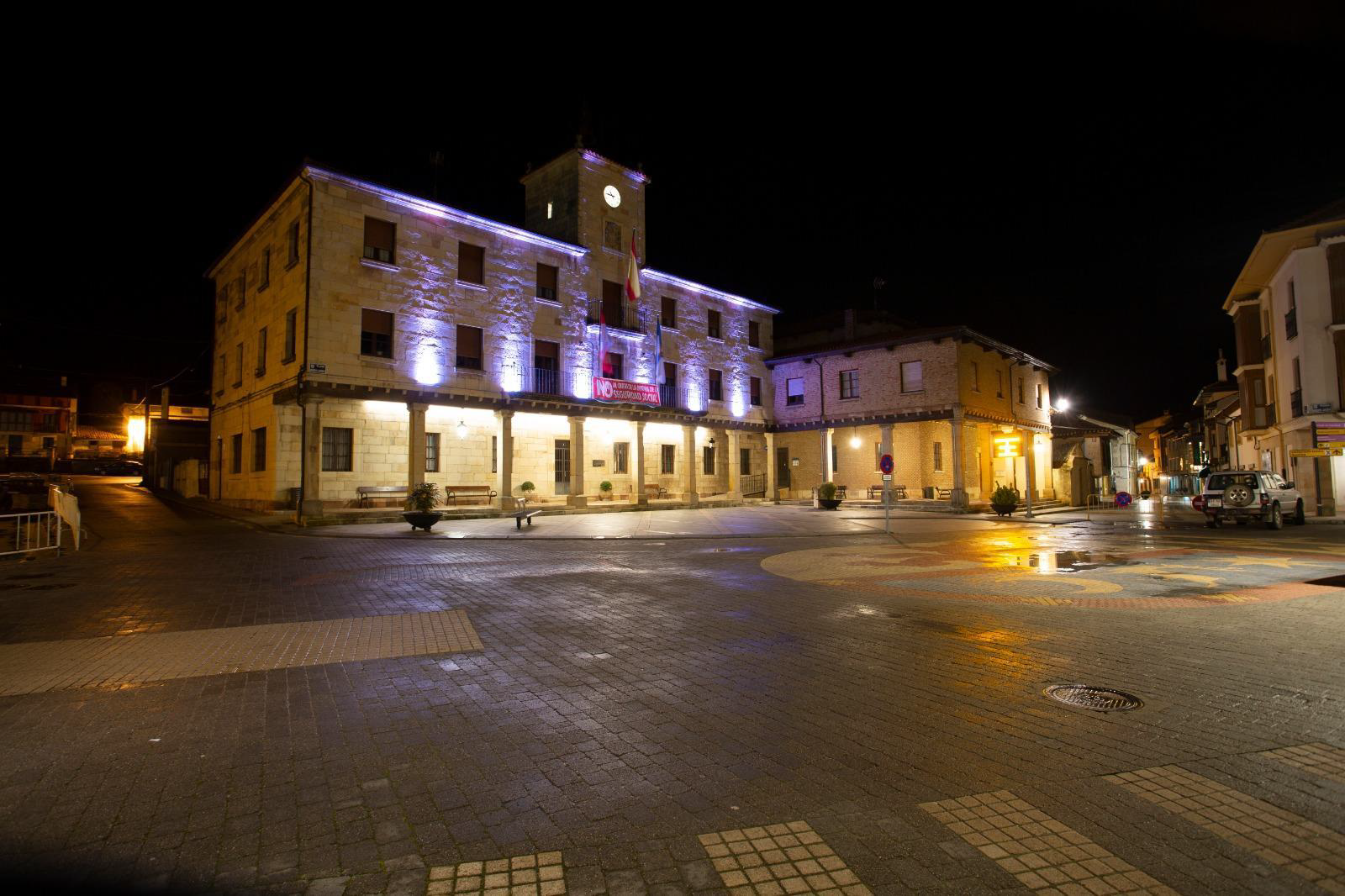
Finally, the public lighting consultancy EnergyTAS dispels the false myths surrounding ESEs — such as claims that their works are of low quality or that their maintenance is only corrective.
Through numerous examples of municipalities it has worked with over the years — and continues to work with today — EnergyTAS demonstrates that the ESE model is a true guarantee of success.
In essence, an ESE project allows municipalities to avoid any technological or financial risk, thereby preventing debt accumulation while ensuring quality service and measurable results.
Carlos Cifuentes, CEO of EnergyTAS, will further expand on this topic at the upcoming National Lighting Symposium organized by the Spanish Lighting Committee (CEI) in Huesca.